AI-IETM combines Interactive Electronic Technical Manuals with Artificial Intelligence to make technical information faster to search and easier to access for maintenance and operational activities.
Traditional technical manuals require users to navigate through chapters, sections, tables, drawings, and multiple documents. An AI-enabled IETM allows users to interact with technical information using natural-language queries and intelligent information retrieval.
Quantum TechDocs PRO is particularly valuable for defence, aerospace, naval, automotive, electronics, and other complex engineering systems where large volumes of technical documentation need to be accessed quickly.
AI-IETM is an intelligent form of Interactive Electronic Technical Manual that combines structured technical documentation with AI capabilities and knowledge retrieval capabilities.
Instead of manually searching through thousands of pages, users can ask questions in natural language and retrieve relevant technical information from the available documentation.
AI-IETM can bring together information from multiple manuals, subsystems, equipment documents, maintenance procedures, troubleshooting information, drawings, and technical references within a unified environment.
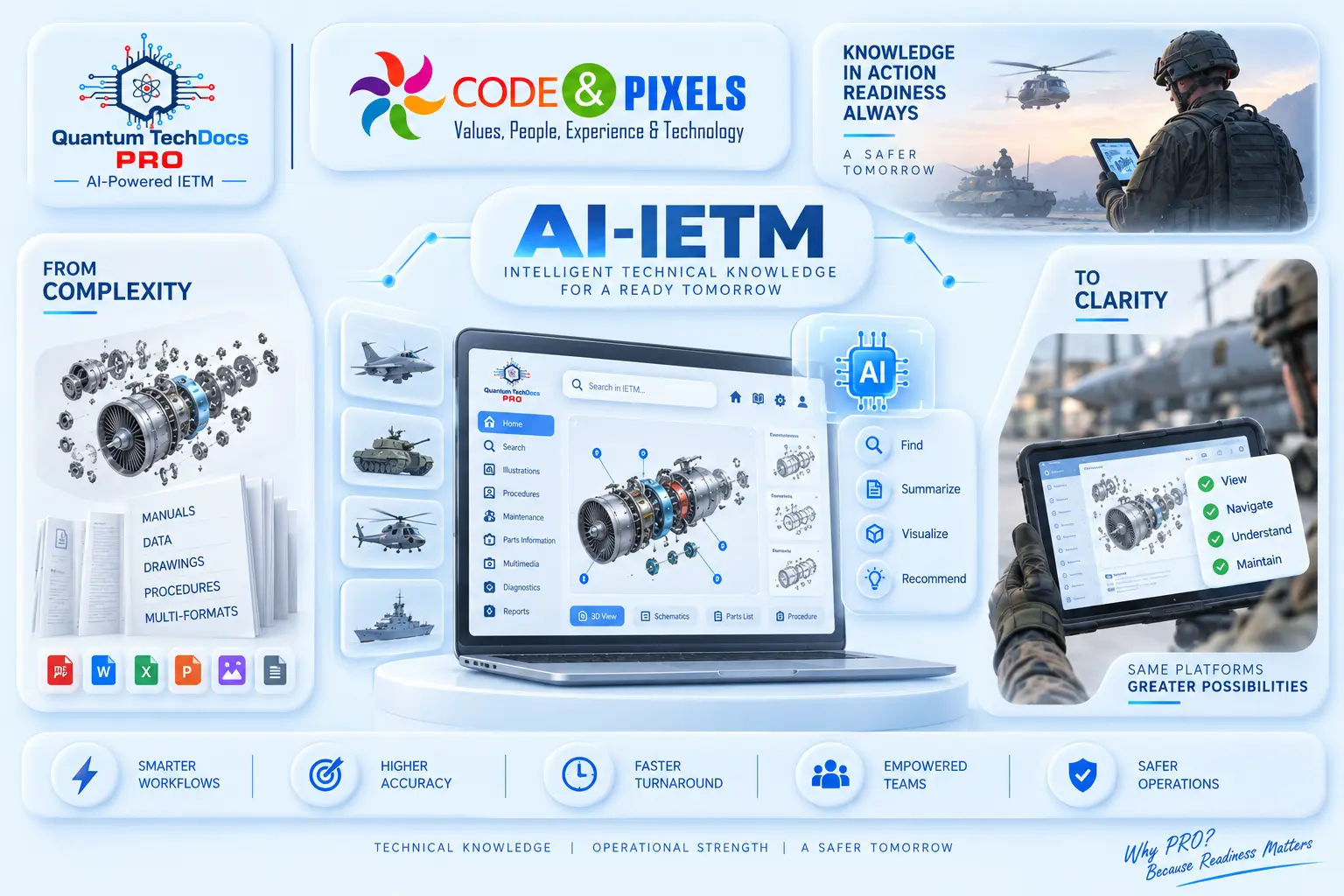
Modern defence and engineering systems can contain thousands of pages of technical documentation covering multiple systems and subsystems.
Finding the correct information manually can take considerable time.
AI can improve the information-access process by helping users:
Search technical documentation using keywords, phrases, or natural-language questions instead of relying only on exact keyword matching.
AI helps identify relevant technical information from large collections of manuals and structured documentation.
Users can interact with technical documentation using questions that resemble normal human communication.
Relevant fault information, maintenance procedures, technical references, and related documentation can be brought together to support troubleshooting activities.
AI-IETM can be particularly useful for complex platforms containing multiple manuals, systems, subsystems, components, and maintenance documents.
Information from different technical documents can be accessed through a unified knowledge environment rather than requiring users to search through individual manuals separately.
Defence platforms often involve complex systems with extensive technical documentation.
Missile systems, military vehicles, naval platforms, aircraft, radar systems, communication systems, electronic systems, and other mission-critical equipment may require extensive maintenance and operational documentation.
Defence IETM can provide defence personnel with a faster way to access technical information while retaining the structured nature of an IETM environment.
The combination of structured IETM content, intelligent search, technical knowledge retrieval, multimedia and interactive navigation creates a more efficient technical information environment.
IETM Level 4 is designed for complex technical documentation environments where information is structured and managed through a database-driven system.
AI capabilities can be added to this environment to provide an intelligent information-access layer.
AI adds an intelligent information-access capability to the structured IETM environment.
For Indian defence applications, IETM development is associated with the JSG 0852 standard.
AI-IETM does not replace the underlying technical documentation structure or applicable defence requirements. Instead, AI can function as an additional capability for accessing and retrieving information from the structured technical documentation environment.
This approach allows organisations to combine established IETM practices with modern AI-based information retrieval.
Modern naval platforms can contain large volumes of documentation covering machinery, electrical systems, propulsion, weapons, electronics, safety systems, maintenance procedures, spare parts, and multiple subsystems.
An AI-enabled Shipbuilding IETM can help users locate relevant technical information across these documentation sets.
This can be especially useful when different systems and subsystem manuals need to be accessed from a common technical information environment.
AI-IETM can also work alongside multimedia and 3D technical documentation. Users can access technical procedures together with:
This creates a richer technical information environment for complex equipment.
Defence OEMs developing complex systems need to manage technical information throughout the equipment lifecycle. Quantum TechDocs PRO features provide an intelligent information-access environment.
The Quantum TechDocs PRO use cases apply to:
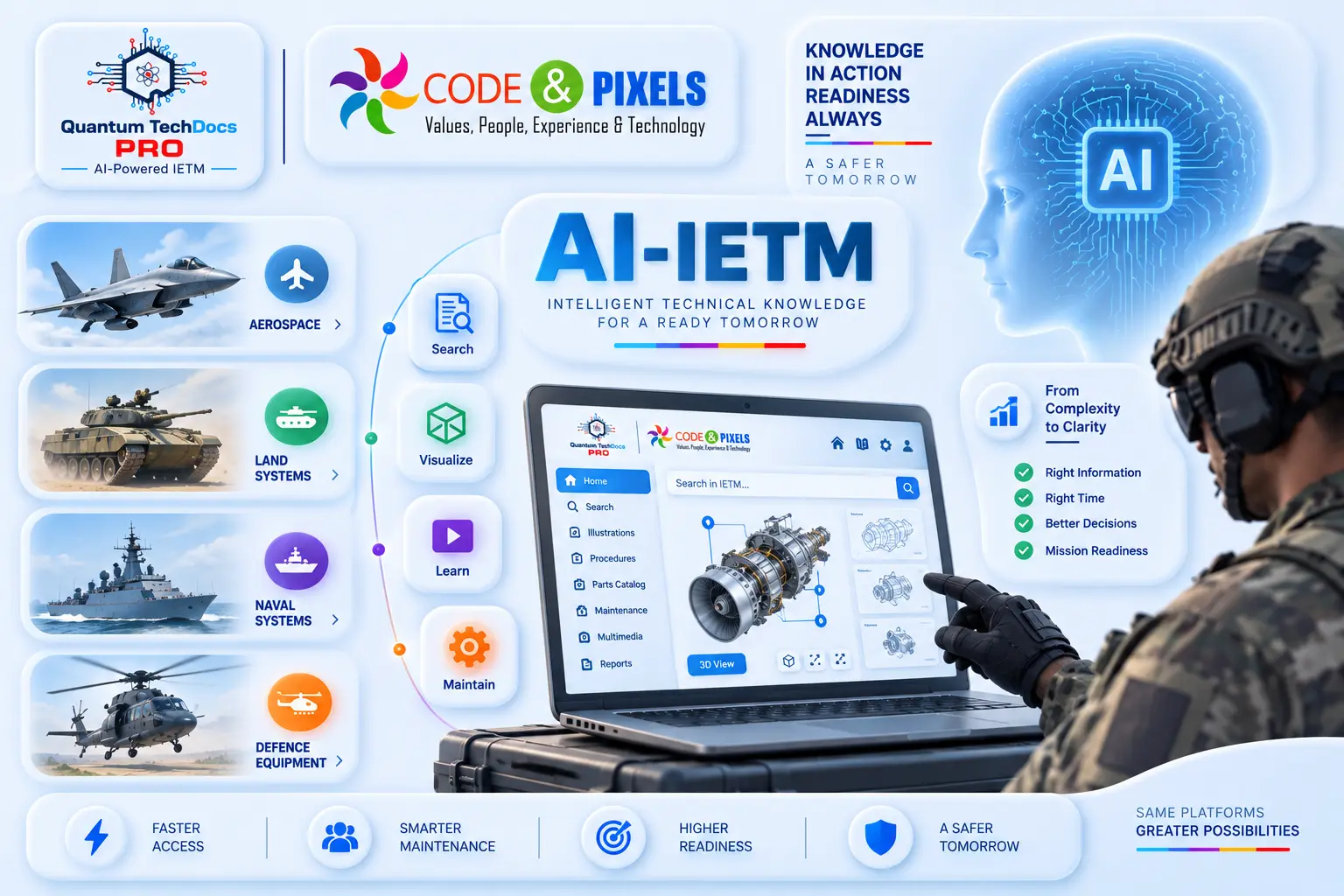
IETM technology is moving from simple electronic document access toward intelligent technical knowledge systems.
The next generation of technical manuals will increasingly combine structured documentation, following the Quantum TechDocs PRO approach, databases, multimedia, 3D visualisation, advanced search and Artificial Intelligence.
AI-IETM represents this transition by making technical documentation more interactive, searchable and accessible for users working with complex equipment.
AI-IETM is an Artificial Intelligence-powered Interactive Electronic Technical Manual that combines structured technical documentation with intelligent search and knowledge retrieval.
Traditional IETM systems provide structured navigation and search. AI-IETMs add intelligent capabilities such as natural-language queries and AI-assisted technical information retrieval.
Yes. AI-IETM is designed to help users access information across large collections of technical manuals and documentation.
Yes. AI-IETM can support technical information access for complex defence systems such as missiles, military vehicles, naval platforms, aerospace systems, radar and defence electronics.
No. AI enhances the information-access capabilities of an IETM. The underlying technical documentation, structure, standards and applicable project requirements remain important.
Yes. AI-IETM environments can incorporate 2D drawings, 3D models, exploded views, animations and other multimedia technical information.